
Identity - How do you know someone is, who they say they are?
You are a bookkeeper, or maybe a tax agent. You get a phone call from someone. You agree to provide them professional services. You send them your terms and engagement letter and they sign. But wait! You have never meet. How do you know that they are who they say they are?
In this article we will dive into verifying identity of clients. What proof is required, the methods and how these vary for different situations.
What is required?
The TPB, ATO and AUSTRAC require you to verify your clients
full name, and either
their residential address OR date of birth.
The TPB/ATO also requires that you verify
the person you are dealing with has authority to represent the client, (i.e. trustee of a trust, director of a company etc).
For AML CTF AUSTRAC also requires you verify additional information:
the entity type of the client (i.e. sole trader, body corporate, trust etc).
who the Beneficial Owners are; i.e. those who own more than 25% shares or are in effective control of the customer.
assess the client’s AML/CTF risk
do a PEP (Politically Exposed Persons, adverse media and Sanctions watch list check).
In situations where the AML risk is higher, you also need to collect additional information around the SoW/PoF (source of wealth or proof of funds).
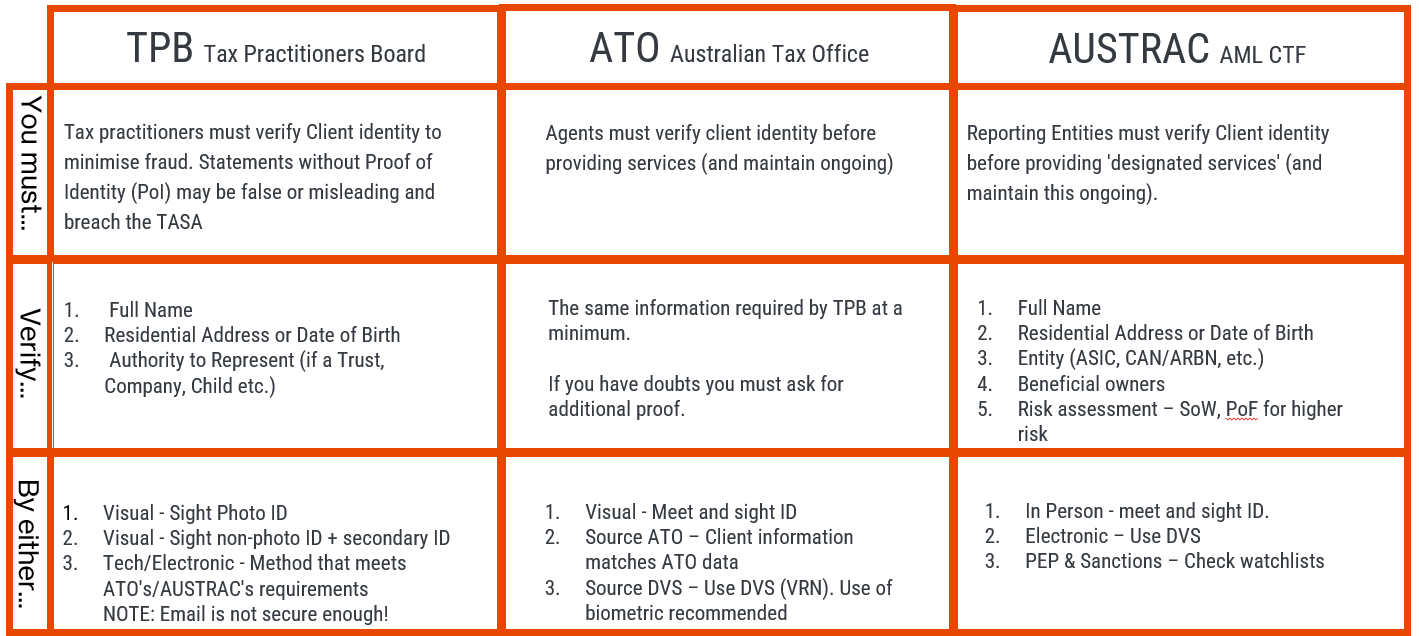
This table shows what you need to do for the TPB and ATO and AUSTRAC (AML/CTF)
Verification Methods
There are different methods to verify identity:
MANUAL (in person)
You can verify the identity by meeting your client when they bring in their identity document. If you always meet your client in person, just get them to bring along their photo ID (passport or drivers license). You need to actually sight the ID and compare it to the person to confirm the person matches the photo on their ID. If they do not have a photo ID then you will need to gather additional information a secondary ID document.
You then need to record that you have done this verification in person (in case you are audited). If you use 2Shakes we include a manual IDV check flag in our system. The 2Shakes system asks you to confirm that a manual ID has been done, and this creates a record for you! There’s not add on cost when you do a manual ID verification in 2Shakes.
MANUAL with PEP
Where AML/CTF applies you need to do a PEP, adverse media and sanctions check. To do this manually you need to google search are review watchlist. The vast majority of people however will just run a PEP and sanctions check electronically. Even if you have done a manual IDV you can still add a PEP check on in 2Shakes as an addition to your manual ID verification ($2.50). By entering the persons name and date of birth the 2Shakes system will automatically search and report back if there is a possible hit. Hits are very rare, but they do happen. We have a separate blog on how to manage a PEP hit.
CERTIFIED COPIES
If you can’t met with your client you can ask someone who can to certify a copy on your behalf. A lawyer, justice of the peace or other trusted authority can do this. You can upload details of certified copies in 2Shakes in the same way as a manual ID. You can also add on a PEP in the same way. Getting a trusted person in authority to confirm the identity of someone is also an acceptable method for those who don’t have Identity documents. For example a doctor can confirm the identity of someone who is very old and no longer has a passport or drivers license.
BIOMETRIC
If you aren’t able to meet the person, or they didn’t bring their ID with them. You can remotely verify their ID with a Biometric IDV check in 2Shakes. The 2Shakes biometric identity verification process meets the requirement of AUSTRAC. It verifies information with the DVS and also includes a PEP& Sanctions check. The total cost is $12.50, its very fast, and very easy for your client to do. You get an email notifying you when it is done, and you can go into 2Shakes to see a report of the results. It will show the photo of the person against the photo of the ID document they used. It will compare measurements on the face and tell you if they match the photo on the ID. We also verify the data with the Australian Governments Document Verification Service (DVS). Our system will review the integrity of the document too, so it will flag if the ID document looks like it is a fake.
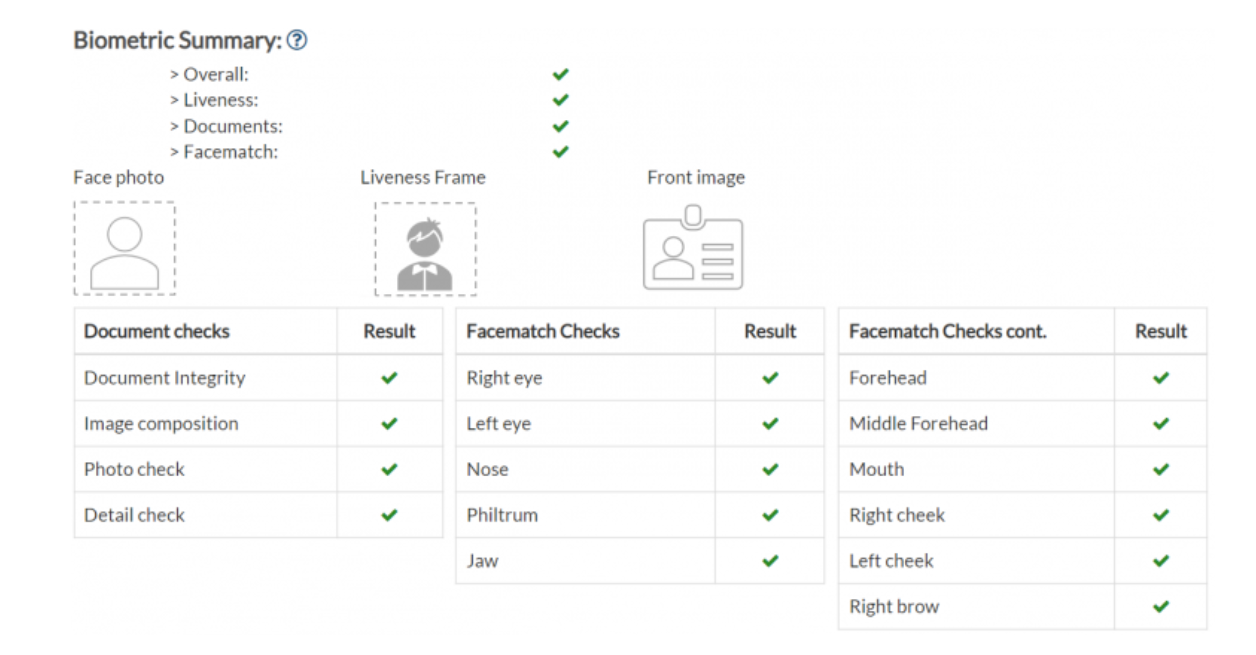
Biometric ID Summary - checks the document and matches facial measurements
For AML/CTF - is ID the same?
Yes! The identity verification for AML/CTF is the same but with extrainfo. So you can still use the same options of manual in-person, certified copies, or biometric. But you also need to:
Run a PEP check
Determine who is a beneficial owner and identity them as well.
Assess the clients risk and if it is higher then find out where their money came from (SoW or PoF).
2Shakes is set up to guide you through when and how to to assess risk, run a PEP add beneficial owners and do the ID verifications you need. Read our blog posts on AML/CTF to find out more.